

Digital vs Paper Planners: 7 Honest Differences

Paper planners feel like commitment. Digital planners feel like a gamble.
Most comparisons you will read are written by someone selling one or the other. This one is not going to pretend paper is obsolete or that digital is magic — here are seven real differences, and who each format actually suits.
1. Cost over a year
Paper: a good planner runs $20–$40 and lasts exactly one year. Refills and inserts add more. Five years of paper planning is $100–$200, minimum.
Digital: a one-time $6–$25 download, reused every year. Printing costs extra if you choose to print — but you do not have to.
Digital wins on cost by a wide margin, and it is not close.
2. Portability
Paper: one physical object. Weight is real, and if you forget it at home, your day is unplanned.
Digital: lives on the device already in your bag. A phone version of your planner is always with you. The catch — you need that device charged.
Slight edge to digital, unless your planner strategy is "one notebook, one pen, zero screens."
3. Writing feel
This is where honest comparisons matter most.
Paper: pen on paper. Faster for messy thinking, doodles, and brainstorms. Nothing beats it for actually remembering what you wrote — the physical act helps memory.
Digital: a stylus on glass is slicker and slower, though a matte screen protector narrows the gap. Typing, on the other hand, is faster than handwriting for a lot of people — which is why some planners ship in both formats (PDF vs HTML explained).
Paper wins for thinking. Digital wins for speed. Neither is wrong.
4. Searching and editing
Paper: finding that one note from March means flipping pages. Typos are permanent.
Digital: search finds any word in seconds. Edits are undo. Copying last month's layout takes one tap.
Digital wins decisively. If you have ever lost a good idea inside a finished notebook, you know why.
5. Backups
Paper: if the notebook is gone, it is gone. No backup exists.
Digital: sync plus a monthly exported PDF copy means your planning history survives a dead device, a lost tablet, and a spilled coffee.
This is the difference people forget until the day it matters.
6. Distraction
Paper: a notebook cannot ping you.
Digital: the same device holds your messages, your feeds, and your planner. Some people plan better with everything in one place; others end up "checking one thing" and lose the evening.
Honest answer: this one depends entirely on your self-control, not the format.
7. Customization
Paper: what you bought is what you have. Want a different layout? Buy another notebook.
Digital: reorder sections, duplicate pages, add stickers, print only the pages you use. A digital planner reshapes itself to how you actually work.
Digital wins, but with effort — flexibility you never touch is worth nothing.
So which one?
Choose paper if you think by handwriting, planning is your screen-free ritual, or you have never stuck with any system for more than a month (paper has fewer escape hatches).
Choose digital if you already live on a tablet or laptop, you want search and backups, or you have tried paper and kept losing notebooks.
And "both" is legitimate. Many people keep a paper notebook for daily messy thinking and a digital planner for schedules, habits, and long-term tracking. The formats are tools, not teams.
Where to start
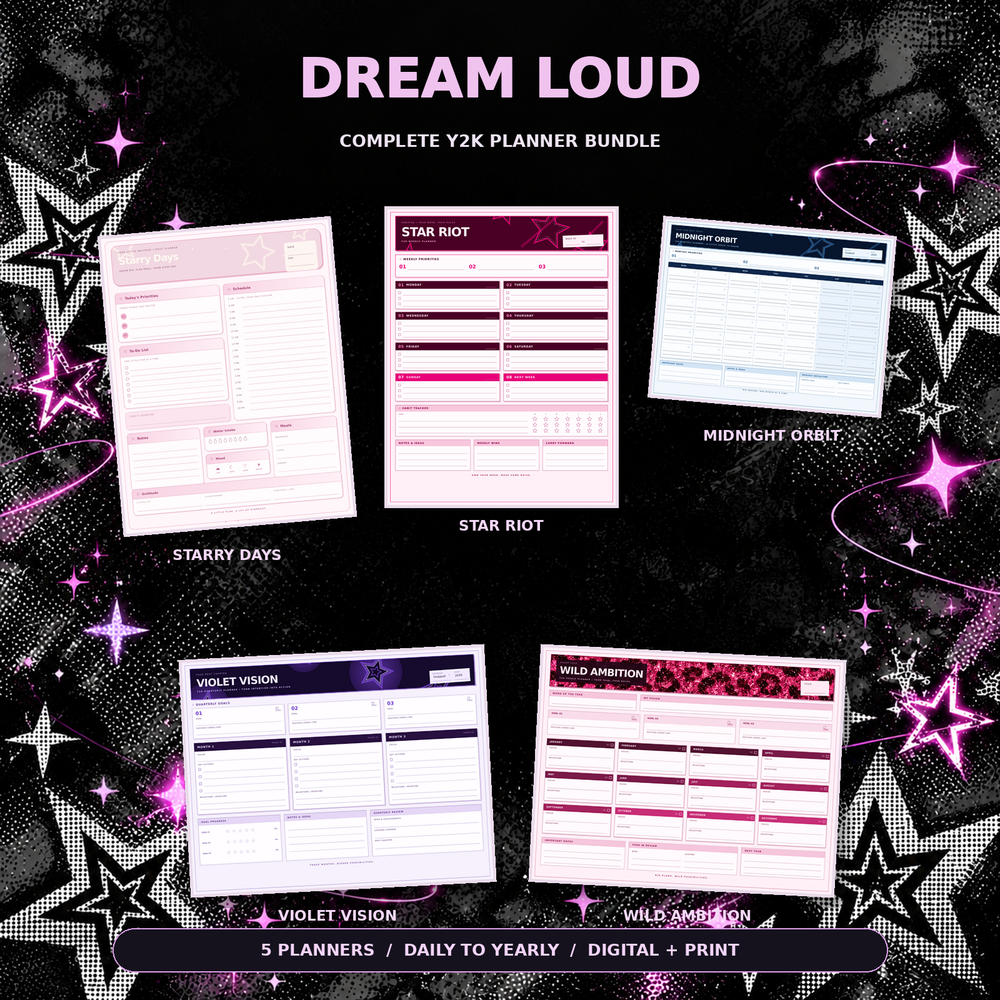
If digital sounds right, the Dream Loud Complete Y2K Planner Bundle gives you every page type — daily, weekly, monthly, quarterly, yearly — in one download for $24.99. Set it up once with the GoodNotes setup guide and you have a full year of planning that costs less than two paper planners.
Students: the study planning system shows how to run assignments and exams from a digital planner.